
Things to Do in Costa Rica in September
September weather, activities, events & insider tips
Low Season · Budget Friendly
September Weather in Costa Rica
Temperature, rainfall and humidity at a glance
78°F (26°C)
High Temp
62°F (17°C)
Low Temp
14.0 inches (356 mm)
Rainfall
70%
Humidity
⚠ September brings Costa Rica's heaviest rainfall. Multi-day rain events (temporales) can last two to three consecutive days, on the Pacific slope and in the southern zone around the Osa Peninsula. These are not quick tropical showers. They are sustained low-pressure systems that cause river flooding, landslides on mountain roads, and temporary road closures. Check the Costa Rican National Meteorological Institute (IMN) forecasts. Heed local warnings about river crossings.
⚠ Riptide conditions on Pacific beaches worsen in September. Larger swells and storm-driven currents are the cause. Playa Hermosa, Dominical, and the beaches around Jaco see the worst effects. Swim only at beaches with designated safe zones or lifeguard presence. Never swim alone on unfamiliar beaches during or immediately after storms.
⚠ Mosquito-borne illness risk (dengue, chikungunya) climbs in September. Standing water from heavy rains creates breeding habitat in the lowlands. The Caribbean coast and Pacific lowlands below 500 m (1,640 ft) carry the highest risk. Use repellent consistently. Sleep under screens or nets. Wear long sleeves at dawn and dusk.
Is September Right for You?
Weigh the advantages and considerations before booking
Advantages
- + September hits rock bottom on Costa Rica's tourism calendar. Manuel Antonio's beaches, Arenal's hanging bridges, the Monteverde cloud forest boardwalks. These places feel overrun in January. But now you might share a trail with a coati and nobody else. Lodge rates in La Fortuna and along the Nicoya Peninsula drop dramatically from dry-season highs. Last-minute availability opens up at properties that book months ahead in peak season. Worth it.
- + The green season peaks in September. Forests around Tortuguero and Osa Peninsula grow dense enough that the canopy drips even between storms. Rivers run fast enough for thrilling whitewater on the Pacuare and Reventazon. Waterfalls that barely trickle in March (La Fortuna, Nauyaca, Rio Celeste) hit full, thundering force. Post-rain light is the best Costa Rica produces all year: filtered, warm, dramatic against volcanic ridgelines. Pack rain gear.
- + September sits within olive ridley and green sea turtle nesting season. Arribada mass nesting events at Ostional Wildlife Refuge peak between August and November. Several thousand turtles hauling onto dark volcanic sand at dusk is one of Central America's few wildlife spectacles that stops you mid-sentence. The Caribbean side adds hawksbill nesting. Tortuguero's green turtle season winds down but stays active in early September.
- + Costa Rica's birdlife peaks when northern migrants arrive in late September while residents remain active. Serious birders plan around this overlap. The resplendent quetzal is easier to spot in San Gerardo de Dota's cloud forests because wild avocado trees (aguacatillo) are fruiting. Scarlet macaw pairs fly over Osa Peninsula canopy at predictable morning intervals. Birding lodges around the Central Valley and Caribbean lowlands have openings impossible to secure in February.
Considerations
- − September is statistically Costa Rica's wettest month. 356 mm (14 inches) falls unevenly. The Caribbean side and Osa Peninsula see multi-day stretches of continuous rain that turn dirt roads into mud channels. River crossings in places like Drake Bay become impassable. Some remote Osa lodges close entirely in September. If your plan requires reliable daily sunshine, pick another month.
- − The Pacific coast and Guanacaste get the temporales del Pacifico. These are not June's quick afternoon downpours but sustained low-pressure systems dropping rain for two or three straight days. Central Pacific surf gets big and messy. Beach days become unpredictable. Some boat excursions (Isla del Cano snorkeling, Marino Ballena whale watching) cancel more frequently than operators admit upfront. Check conditions daily.
- − Some Nicoya Peninsula beach towns (Samara, Nosara, Santa Teresa) reduce hours or close in September. Open restaurants and tour operators become scarce. La Fortuna, Monteverde, and the Central Valley fare better. If your itinerary centers on a specific Pacific beach town, confirm your operators and lodges are running before you commit. Call directly. Do not rely on websites.
Best Activities in September
Top things to do during your visit
Pacuare River Whitewater Rafting
September rainfall makes the Rio Pacuare Central America's best whitewater run. The river carves through a Talamanca Mountains gorge where howler monkeys scream from canyon walls and toucans cross overhead between rapids. Class III-IV water in September runs faster and fuller than the tamer dry-season version most tourists see. The Turrialba put-in sits at roughly 600 m (1,970 ft) elevation. Morning air is cool enough that spray feels refreshing, not cold. Most full-day trips cover 28 km (17.4 miles) and include a riverside lunch where guides grill chicken over wood coals while you sit on volcanic rocks listening to the current. The gorge section between Huacas and Dos Montanas is the stretch you came for. Jungle closes overhead in a corridor so narrow it feels like a tunnel. September water levels make hydraulics more complex. Operators run smaller groups. Guides earn their tips. Book through licensed operators at least a week ahead. The best guides fill boats early in green season. See current rafting options in the booking section below.
Booking Tip: Book seven to ten days ahead for September departures. Seek ICT (Costa Rican Tourism Board) certification and swift-water rescue training. Multi-day trips with overnight jungle camps sell out faster than single-day runs even in low season. Plan ahead.
Cloud Forest Night Walks in Monteverde
Monteverde's cloud forest sits between 1,400 m and 1,800 m (4,590 to 5,905 ft) elevation. September's heavy mist and dripping canopy bring the forest's nocturnal life to the surface. Red-eyed tree frogs cling to heliconia leaves at eye level. Their crimson eyes reflect your headlamp. Tarantulas the size of your palm sit motionless on moss-covered trunks. Kinkajous, normally deep in the upper canopy, descend to lower branches when the mist thickens. Night walks in September feel different from dry-season walks. The moisture amplifies every sound. Hear the drip of condensation off bromeliads. Listen for the metallic clicking of glass frogs. The Monteverde toad calls with deep resonance. Air temperature drops to about 15°C (59°F) after dark at this altitude. The cloud forest earns its name. Visibility sometimes narrows to a few meters. Guides carry high-powered spotlights. They know which trees the olingo and two-toed sloths favor. Low tourist numbers help. Peak amphibian activity seals it. September night walks are arguably the single best wildlife experience available in Costa Rica this month.
Booking Tip: Reserve guided night walks two to five days ahead. Book through the Monteverde reserves or licensed naturalist guides. Groups of six or fewer work better than larger tours. Shy species reveal themselves to smaller groups. Bring a light fleece and rain layer. The cloud forest soaks you from the air, not the sky.
Turtle Nesting at Ostional and Tortuguero
September is prime nesting season on both coasts. Stand on a dark beach. Watch an olive ridley sea turtle the size of a coffee table drag herself from the surf. She digs a nest with her rear flippers. She deposits a hundred eggs. Then she hauls back to the ocean. This encounter rewires your sense of scale. At Ostional Wildlife Refuge on the Nicoya Peninsula, mass arribada events bring thousands of turtles onto the beach. These last three to seven nights. They cluster around the third-quarter moon. The smell of wet sand and salt concentrates in the humid night air. The sound is slow and rhythmic. Flippers scrape against volcanic grit. On the Caribbean side, Tortuguero's canals and black-sand beaches host green turtles through early September. Leatherbacks occasionally still arrive. Tortuguero requires a boat or small plane to reach. This filters out casual visitors. Beaches stay uncrowded even during active nesting. Both locations require a certified guide for nighttime beach access. Guides use red-filtered lights. They avoid disturbing the turtles. You walk in near-total darkness between nests.
Booking Tip: Ostional arribadas are unpredictable by exact date. Plan to be in the Nosara or Samara area for at least three nights. This improves your odds. For Tortuguero, book a lodge package. Include guided night walks on the nesting beach. Reserve at least two weeks ahead for Tortuguero lodges. Check the booking section below. Find current turtle tour options on both coasts.
Rio Celeste Hiking and Waterfall
The sky-blue river inside Tenorio Volcano National Park is surreal in any month. September's rain volume does two things dry season cannot. The waterfall crashes with enough force to throw mist 30 m (98 ft) into the air. The forest trail becomes a sensory corridor of wet earth, decomposing leaves, and sharp mineral tang. Volcanic springs give the river its color. The turquoise comes from volcanic minerals and sulfur interacting with calcium carbonate in the water. Saturation intensifies when the river runs high. The trail is roughly 6 km (3.7 miles) round trip. It is mostly flat with a steep descent to the waterfall viewpoint. In September you will likely share it with a handful of other visitors. January and February bring queues. The trail gets muddy. It runs ankle-deep in places. Rubber boots are available for rent at the park entrance. They are not optional. Morning arrivals before 9 AM catch the forest before the clouds lower. Light through the canopy hits the river at angles that make the color almost unbelievable. Tubing on the Rio Celeste downstream of the park has become increasingly popular. It runs well in September's higher water.
Booking Tip: The park limits daily visitors. Arrive early. Book a guided tour that includes transport and guaranteed entry. Rent rubber boots at the trailhead. Do not ruin your hiking shoes. A guide adds context on the volcanic geology. One is not required for the main trail. See current Rio Celeste tours in the booking widget below.
Costa Rican Cooking Classes in the Central Valley
September's afternoon rain pattern makes this the ideal month for an indoor activity. Learn something worth keeping. The Central Valley around San Jose, Heredia, and Atenas grows most of what ends up on a Costa Rican plate. Cooking classes here start in the morning. They happen at farm-to-table operations. You pick culero peppers and cilantro coyote from the garden. Then you head into the kitchen. Learn to make gallo pinto properly. Toast the rice before combining it with yesterday's black beans. Finish with Salsa Lizano. This tangy brown sauce goes on everything. Visitors become quietly obsessed. It tastes nothing like the hotel breakfast version. You will learn to make tortillas by hand. Use freshly ground nixtamalized corn. Feel the dough shift from sticky to smooth. Pat it between your palms. Cook it on a comal until the edges brown. The kitchen fills with roasted-maize smell. This is the actual scent of rural Costa Rica. By the time the afternoon rain starts hammering the corrugated roof, you are sitting under cover eating what you made. The coffee comes from beans grown on the same property. The classes run regardless of weather. In September, this is the point.
Booking Tip: Book three to five days ahead. Look for farm-based classes rather than hotel kitchen demonstrations. Morning sessions work best. They align with the dry part of the day and let you visit the garden in sunlight. Browse current cooking experiences in the booking section below.
Manuel Antonio National Park Dawn Visits
Manuel Antonio is Costa Rica's most visited national park for good reason. September strips away the reason most experienced travelers avoid it: the crowds. The park opens at 7 AM. In September you can walk the main trail from the entrance to Playa Manuel Antonio with a naturalist guide and encounter white-faced capuchins dropping down to investigate you rather than performing for tour groups. The three-toed sloths in the cecropia trees along the beach trail are easier to spot when there are fewer people making noise below them. September mornings typically hold clear until noon or early afternoon. This gives you a solid window of warm, humid hiking under canopy where the air smells of damp leaf litter and the occasional sharp burst of wild ginger. The beaches inside the park are swimmable in the mornings when the Pacific is calmer. The warm water at roughly 27°C (81°F) makes the Caribbean feel comparatively tepid. The catch: afternoon storms roll in hard, and the park closes at 4 PM regardless. Plan your visit for first light. The squirrel monkeys (mono titi), endemic to this stretch of Pacific coast and classified as endangered, are most active in the early morning when they move through the secondary forest in troops of twenty to thirty, chattering and leaping between branches with a recklessness that seems impossible for an animal that small.
Booking Tip: The park is closed on Tuesdays. Book a certified naturalist guide at least three days ahead for September. Guides carry spotting scopes. They know the current sloth and monkey territories. Arrive before 7 AM to be in the first group admitted. Check the booking section below for current guided walk options.
Where to Stay in Costa Rica in September
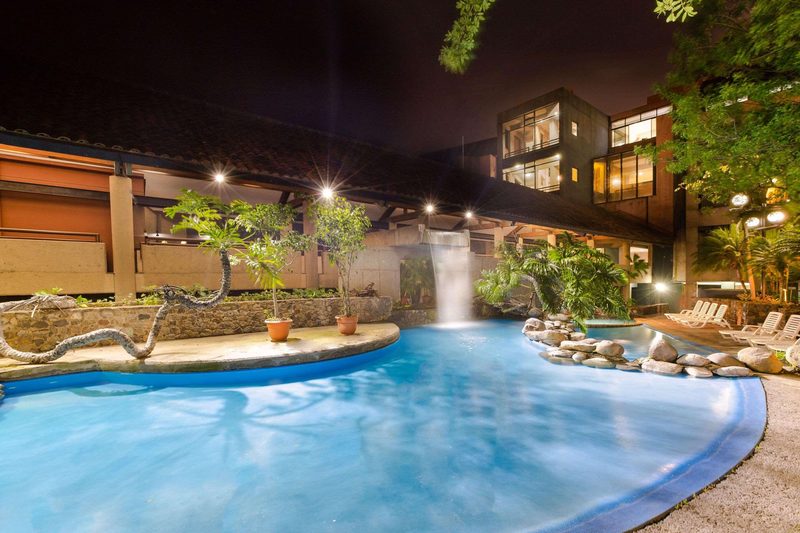
Hand-picked hotels across price tiers for September travellers.
September Events & Festivals
What's happening during your visit
September 14-15
Independence Day (Dia de la Independencia)
September 15 marks Costa Rica's independence from Spain. The celebration is unlike any national holiday you have seen in Latin America because it is low-key and community-centered rather than military. The tradition centers on the Freedom Torch (Antorcha de la Independencia). It is carried by relay runners from Guatemala through Central America, arriving at the old capital of Cartago on the evening of September 14. Schools across the country hold lantern parades (desfiles de faroles) on the night of the 14th. Children carry handmade paper lanterns through town streets while the national anthem plays from every doorway. The lanterns glow in the dark against the wet pavement of towns like Heredia, Grecia, and Sarchi. The smell of chicharrones and tamales drifts from family kitchens opened for the occasion. On the 15th itself, marching bands composed almost entirely of high school students parade through every town center in the country. The drumlines are surprisingly good. San Jose's parade along Avenida Segunda is the largest. The smaller town celebrations in the Central Valley feel more genuine and welcoming to visitors.
Mid to late September (continuing through October)
Whale Season Opening (Humpback Migration from the Southern Hemisphere)
Southern Hemisphere humpback whales begin arriving along Costa Rica's central and southern Pacific coast in late August and September. By mid-September the waters around Marino Ballena National Park (the park is shaped like a whale's tail when viewed from above) have enough whale activity that boat-based sighting trips run most mornings. These are Antarctic humpbacks migrating north to breed in warmer water. September catches the early arrivals when the pods are still relatively concentrated near Uvita and Drake Bay. The whales breach, slap their pectoral fins, and occasionally spy-hop close enough to small boats that you can hear the explosive exhale of the blowhole before you see the spout. The season peaks in October. September offers smaller tour boats and calmer departure mornings before the weather systems intensify.
Packing Checklist
Bookmark this page — your progress is saved between visits
Need the full list with shopping links?
Climate-specific gear, brand recommendations, and what to leave at home.
View Costa Rica Packing List →Essential Tips
Insider knowledge and common pitfalls to avoid
Insider Knowledge
September mornings on the Pacific coast are often clear and calm until noon or 1 PM, then the rain arrives and stays through evening. Locals and experienced residents front-load everything before lunch: market runs, beach time, hikes, surf sessions. By 2 PM most Ticos are indoors, and the smart visitors follow suit. Schedule your outdoor plans for 6 AM to noon, then use afternoons for cooking classes, hot springs, spa time, or the long coffee-and-read session your vacation promised. Sleep in at your own risk.
Costa Rica's green season has a micro-pattern that most visitors miss: the first two weeks of September tend to see a brief drier spell called the veranillo de San Juan (little summer), though its timing shifts year to year and it is not guaranteed. If your dates are flexible within September, aiming for the first half slightly improves your odds of consecutive dry mornings, on the Pacific side. The Caribbean coast follows its own weather system entirely and can be drier than the Pacific in September, making Cahuita and Puerto Viejo surprisingly good bets this month. Timing matters.
The Osa Peninsula's dirt roads between Sierpe and Drake Bay become four-wheel-drive-only in September, and even then some sections require river fording that rental car companies explicitly exclude from insurance coverage. If your plan includes the Osa, either fly in on a small charter from San Jose (SANSA operates the route) or arrange boat transfer from Sierpe. Do not attempt the coastal road in a sedan unless you enjoy explaining to the rental company how their Hyundai ended up axle-deep in the Rio Drake. Fly instead. Or boat.
September 15 is Independence Day and a national holiday when banks, government offices, and many businesses close. The days surrounding it (September 14-16) see domestic travel spike as Tico families take mini-vacations, to beach towns in Guanacaste and the Central Pacific. If your trip overlaps these dates, book accommodation in popular domestic destinations like Jaco, Samara, and Tamarindo further ahead than you otherwise would. The rest of September remains uncrowded. Avoid the holiday crush.
Avoid These Mistakes
Planning a purely beach-focused itinerary in September and then feeling cheated when afternoon storms cancel boat trips and turn beach days into half-days. Costa Rica in September rewards travelers who mix elevations and ecosystems: a few days in the cloud forest (Monteverde, San Gerardo de Dota), a few in the lowland rainforest (Tortuguero, Osa), and beach time treated as a morning bonus rather than the main event. The travelers who love September are the ones who came for the jungle, not the tan. Diversify your plans.
Booking internal travel on unpaved roads without checking current conditions. September rain turns remote routes into genuine obstacles, and GPS navigation apps will happily route you down a road that a river has been crossing since August. Always confirm road conditions with your lodge or a local source before driving to the Osa Peninsula, the southern Nicoya, or the mountain passes above San Gerardo. The main highways (Interamericana, Route 27 to the Pacific, Route 32 to the Caribbean) remain reliable. Ask first. Drive second.
Assuming that green season means everything is cheaper. Accommodation drops significantly, yes, and domestic flights are easier to book. But some tour operators maintain their prices year-round because their costs (guides, fuel, permits, insurance) do not change with the season. The savings are real for lodging and flights. Less consistent for tours and activities. The genuine value of September is not the discount but the access: smaller groups, better wildlife sightings, and availability at places that are impossible to book in high season. Value is different from cheap.
Explore More Activities in Costa Rica
Didn't see anything interesting yet?
Browse Viator's full catalog of tours, day trips, food experiences, and private guides in Costa Rica.
See All Costa Rica Tours on Viator