
Things to Do in Costa Rica in May
May weather, activities, events & insider tips
Low Season · Budget Friendly
May Weather in Costa Rica
Long-run averages for May in San Jose
80°F (27°C)
High Temp
64°F (18°C)
Low Temp
10.5 inches (267 mm)
Rainfall
82%
Humidity
13
Sunny-Day UV
⚠ Flash flooding turns real by late May. Low-lying roads and river crossings on the Osa Peninsula and the coastal highway between Quepos and Dominical carry genuine risk. Never cross flooded roads on foot or in a vehicle. Knee-deep water conceals washouts. Currents move fast enough to sweep cars sideways.
⚠ Lightning accompanies most afternoon storms. Strikes come frequently enough to make exposed ridgelines, open beaches, and open water dangerous. Move to shelter when clouds build. This applies to Rincon de la Vieja, Chirripo, and any trail above the tree line.
⚠ Riptides strengthen on Pacific beaches as May swells build. Swim only where conditions post and lifeguards work. Manuel Antonio and several Guanacaste beaches develop lateral currents. Confident swimmers get pulled offshore before they realize what happens.
Is May Right for You?
Weigh the advantages and considerations before booking
Advantages
- + Green season pricing kicks in hard. Lodges across the Central Valley, Arenal, and the Pacific coast that sell out months ahead during dry season suddenly have same-week availability, and rates drop noticeably from the December-through-April peak. Your travel budget stretches further in May without any sacrifice in quality. The operators who stay open are the serious ones. They know the game.
- + The landscape transforms into something the dry-season crowds never see. Waterfalls that barely trickle in March now thunder with white water after the first sustained rains, and the forests around Monteverde and the Osa Peninsula reach their greenest, most photogenic peak. The air in the highlands carries the scent of petrichor mixed with wild orchids blooming along every trail. The whole country looks like someone turned the saturation dial up. You will notice the difference immediately.
- + Mornings across most of Costa Rica stay reliably clear and sunny through midday, giving you a solid 6 to 7 hours of hiking, beach time, and wildlife watching before the afternoon downpours roll in, typically between 2 and 4 PM. This pattern is remarkably consistent. Once you learn to plan around it, May starts to feel like a cheat code. The rhythm becomes second nature.
- + Crowds thin out dramatically at headline attractions. Manuel Antonio National Park, which can feel shoulder-to-shoulder in January, is likely to have trails nearly to yourself on a May weekday morning. Same goes for the hanging bridges around Arenal and the canopy zip-line tours in Monteverde. You are getting the same country, same wildlife, same trails. Just a fraction of the people. The experience changes completely.
Considerations
- − The afternoon rains are not gentle mists. By mid-May, storms arrive with real force, complete with lightning, sudden temperature drops, and enough volume to turn unpaved roads into mud trenches. The routes to Monteverde from the Pan-American Highway and across the Osa Peninsula take the worst of it. Plan around the rain. Otherwise, you will lose half your day to waiting under an awning somewhere. The storms demand respect.
- − Pacific coast ocean conditions roughen considerably. Swells increase and nearshore visibility drops as river runoff pushes sediment into the water, making snorkeling and diving on the Pacific side notably less rewarding than during dry months. If underwater visibility matters to your trip, the Caribbean side holds up somewhat better. It is not immune either. Adjust your expectations accordingly.
- − A handful of smaller eco-lodges and remote operators in the southern Pacific zone reduce services or close entirely between May and mid-June, so availability outside the main tourism corridors narrows. Check operational status before committing to off-grid itineraries on the Osa Peninsula or around Drake Bay. Do your homework. The closures are real.
Best Activities in May
Top things to do during your visit
Cloud Forest Exploration in Monteverde
Monteverde's cloud forest is one of those places that improves with rain. The mist that rolls through the canopy in May turns every branch into a hanging garden of epiphytes, moss, and dripping orchids, and the humidity draws out the resplendent quetzal, which nests here from March through June. You will hear the bird before you see it, a low resonant whistle that cuts through the steady drip of water off cecropia leaves. Morning walks before 8 AM tend to offer the clearest visibility through the canopy, and by the time clouds descend around midday you have already seen what the forest holds. The trails are muddier than in dry season, obviously. The tradeoff is walking in near-solitude through one of the most biologically dense forests on Earth. Green season mist is not an obstacle here. It is the whole point. The diffused light turns every photograph professional, and the sound of water moving through the canopy in a hundred small streams creates the kind of ambient texture that makes you stop walking just to listen. Stay still. The forest rewards patience.
Booking Tip: Book guided walks at least a week ahead, as the Monteverde reserve limits daily visitor numbers year-round. Look for guides certified by the Costa Rican tourism board (ICT) who carry spotting scopes and can identify bird calls. Current tour options, including combination packages with suspension bridges and night walks, are available in the booking section below. Plan ahead. The limits are strict.
White Water Rafting on the Pacuare River
The Rio Pacuare runs through a jungle canyon so steep and overgrown that the only way to see it is from the water, and May's early rains push the river to Class III-IV, the sweet spot where the rapids are exciting without the dangerous flood stage that comes later in September and October. The canyon walls rise roughly 300 m (984 ft) on either side, draped in primary rainforest where toucans and howler monkeys watch the rafts pass from the upper canopy. You will get soaked, that much is guaranteed. But the water temperature hovers warm enough that wetsuits are unnecessary, and the sensation of paddling through a curtain of waterfall spray at the midpoint of the run is something that stays with you. Most full-day trips launch from near Turrialba, about 2 hours east of San Jose, through a landscape of green coffee fields and dairy farms that smells like wet earth and wood smoke from roadside sodas. The Pacuare is consistently ranked among the top rafting rivers in the world. May catches it at its most photogenic, with every tributary waterfall running at full volume. The timing matters.
Booking Tip: Book full-day Pacuare trips at least 10 days ahead through operators with certified safety records and modern equipment. Multi-day trips with overnight jungle camps along the river fill up even in green season, so reserve those 3 weeks out. See current options in the booking section below. Do not wait. The camps are limited.
Wildlife Walks at Manuel Antonio National Park
Manuel Antonio sits on Costa Rica's central Pacific coast where a strip of lowland rainforest meets crescent white-sand coves, and the wildlife density per square kilometer here is possibly the highest in the country. May mornings are the ideal window. The air is still cool enough to catch the salt off the beach mixed with the damp vegetal scent of the forest floor, and white-faced capuchins work through the canopy overhead while two-toed sloths hang motionless in cecropia trees. Three-toed sloths are harder to find, their algae-tinged fur blending into the branches so completely that a trained naturalist guide changes everything. By early afternoon the rain usually arrives. But by then you have had 4 to 5 hours of prime viewing. The park caps daily entries, which in May means you might have entire trail sections to yourself, something that would be unthinkable in February. The beaches inside the park, Cathedral Point, empty out enough in green season that you can hear the waves properly again, without the background noise of tour buses idling in the parking lot.
Booking Tip: Reserve morning entry and a certified naturalist guide at least a week ahead. Guides with spotting scopes will locate animals you would walk right past on your own. The park closes Tuesdays year-round. Browse current guided walk options in the booking section below.
Volcanic Hot Springs and Hiking Near Arenal
Here is the counterintuitive thing about Arenal's hot springs in May: rain makes them better. Sitting in mineral-rich water heated by the volcano's geothermal activity while warm rain falls on your shoulders and steam curls into the jungle canopy is, honestly, one of the best sensory experiences Costa Rica offers in any season. The springs range from around 32 degrees C (90 degrees F) to a near-scalding 50 degrees C (122 degrees F) depending on the pool, and the contrast between the hot water and the cooler rain on your face is the kind of detail no photograph captures. The volcano itself, at 1,633 m (5,358 ft), is often wrapped in cloud during May afternoons. But on clear mornings, usually before 9 AM, the cone emerges sharply against a sky that looks almost impossible against the green surrounding it. The town of La Fortuna at the volcano's base is the staging point, and the smell of gallo pinto, rice and black beans fried with Lizano salsa, drifts from every kitchen by 6 AM. Walk the hanging bridges in the morning while visibility is good, soak in the springs when the afternoon rain arrives, and you have a day that works with the weather instead of against it.
Booking Tip: Hot springs operate rain or shine. Combo packages that include hanging bridges and guided volcano hikes should be reserved a few days out. Solo hot spring visits rarely need advance booking in May. Current Arenal area tours are available in the booking section below.
Surfing on the Guanacaste Pacific Coast
May marks the start of the south swell season on Costa Rica's Pacific coast, and Guanacaste's beach breaks come alive with consistent sets that the dry months rarely deliver. Playa Samara offers forgiving, crumbling waves good for beginners learning to read the water, while Playa Negra further north starts catching overhead sets that draw experienced surfers from San Jose for long weekends. Water temperature sits around 27 degrees C (81 degrees F), warm enough that a rash guard is all you need. Mornings deliver the cleanest conditions, with offshore winds holding the wave faces open before the onshore breeze picks up around 11 AM. The sand at Samara is a fine grey-tan that squeaks underfoot, and the tree line runs close enough to the water that you can retreat to shade between sets without losing sight of the break. Evening sessions have their own texture entirely, waves breaking in a steady rhythm against the calls of scarlet macaws roosting in the beachfront almond trees, the sky going copper and violet as the day's last light catches the spray. May is the sweet spot: the swells are here but the international surf crowd that packs Guanacaste in June and July has not arrived yet.
Booking Tip: Surf lessons and board rentals are available walk-up at most Guanacaste beach towns, but multi-day surf camps should be booked at least 2 weeks ahead. Look for instructors with ISA certification and current lifeguard training. See current surf experiences in the booking section below.
Canal and Wildlife Tours at Tortuguero
Tortuguero sits on Costa Rica's northern Caribbean coast, accessible only by boat or small aircraft, which is exactly why it feels like arriving somewhere the rest of the country forgot about. The network of canals and lagoons threading through the lowland rainforest draws comparisons to a Central American Amazon, and in May, rising water levels open up side channels that are inaccessible during drier months. Your boat glides past caimans basking on half-submerged logs, Jesus Christ lizards sprinting across the water surface in a blur of legs and spray, and green macaws perched in raffia palms overhead. The air smells like wet bark and river mud, and the only sounds between the guide's narration are the electric hum of insects and the occasional crack of a falling branch somewhere deep in the canopy. Leatherback sea turtles may still be nesting on Tortuguero's volcanic black-sand beach through late May, their massive tracks carved into the sand each morning like something prehistoric. The main green turtle nesting season begins in July. But even without turtles, the canals alone justify the trip, and the isolation, no roads, no car traffic, just water and forest, resets something in your head that you did not know needed resetting.
Booking Tip: Tortuguero requires advance planning since access is limited. Book a 2- to 3-night package including boat transfers and guided canal tours at least 2 to 3 weeks ahead. Fly-in options from San Jose take about 30 minutes versus 4 hours by road and boat. Check current Tortuguero packages in the booking section below.
Where to Stay in Costa Rica in May
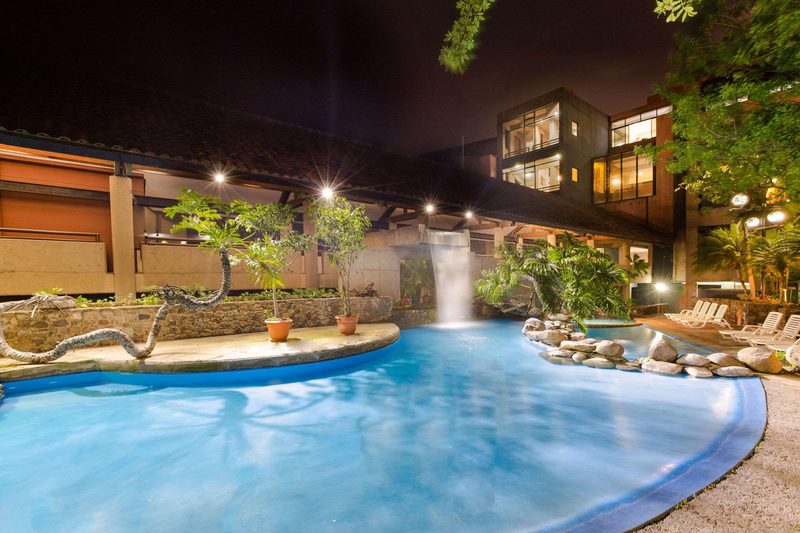
Hand-picked hotels across price tiers for May travellers.
Public Holidays in May
Dates that affect opening hours, transport and crowds
Dían Internacional del Trabajo
Known in English as Labour Day. Observed nationwide as a public holiday.
Dían Internacional del Trabajo
Known in English as Labour Day. Observed nationwide as a public holiday.
Packing Checklist
Bookmark this page — your progress is saved between visits
Need the full list with shopping links?
Climate-specific gear, brand recommendations, and what to leave at home.
View Costa Rica Packing List →Essential Tips
Insider knowledge and common pitfalls to avoid
Insider Knowledge
Schedule every outdoor activity for before noon. Costa Rica's May rain pattern is remarkably predictable. Clear mornings. Building clouds by early afternoon. Full downpour by 2 to 4 PM. Often clearing again by sunset with skies that go copper and violet in a way the dry months never produce. Locals plan their entire lives around this rhythm. You should too.
The Caribbean coast runs on a different weather clock. While the Pacific side shifts fully into green season, the area around Puerto Viejo de Talamanca and Cahuita sometimes catches a brief dry spell in May. This makes it a smart hedge if you want a backup beach destination. Dry is relative on the Caribbean side. You might get several rain-free days in a row while the Pacific is getting soaked.
Rent a 4x4, not a sedan. This barely matters in dry season when every road feels manageable. In May the unpaved roads to Monteverde, the Osa Peninsula, and parts of the Nicoya coast develop potholes deep enough to bottom out a standard car. River crossings that were ankle-deep in March can reach the undercarriage by late May. The rental premium pays for itself the first time you drive through a section that has a sedan pulled over with its hazards on.
The Mercado Central in San Jose is the single best introduction to Costa Rican food. It does not care what month it is. Find a soda, the local term for a small family-run lunch counter, and order a casado: rice, beans, fried sweet plantains, fresh salad, and your choice of protein on a single plate. Someone who has been making the same dish for decades serves it fast. The smell of wood-roasted coffee and frying platanos maduros hits you the moment you walk inside. This layers with the sharp tang of curtido and the warm corn scent of fresh tortillas on the comal.
Avoid These Mistakes
Booking a full-day outdoor itinerary that stretches into the afternoon is a mistake. The rain that arrives by 2 PM in May is not a quick shower you can wait out under a palm tree. It is a wall of water backed by lightning and enough wind to send cafe umbrellas tumbling. Travelers who ignore this pattern lose half their planned activities and spend the afternoon watching rain from a hotel lobby. Front-load everything into the morning. Keep afternoons for hot springs, cooking classes, indoor markets, or simply sitting under a covered terrace with a cup of Costa Rica's excellent coffee.
Do not assume Monteverde and Arenal sit close together just because the map suggests it. The drive from La Fortuna to Santa Elena covers roughly 140 km (87 miles), yet the road demands 3 to 4 hours of your time. Unpaved mountain sections twist through the Cordillera de Tilaran. May mud adds another hour. Plan overnights at each stop. Exhausting day trips mean navigating unfamiliar mountain roads in darkness during rainstorms.
Pack more than beach gear. Costa Rica throws serious elevation at you fast. San Jose and the Central Valley sit above 1,000 m (3,280 ft). Monteverde rises above 1,400 m (4,593 ft). Cerro Chirripo peaks at 3,820 m (12,533 ft). Highland evenings turn cold. You will want proper layers, not beach towels. The coast-to-highland swing hits 10 degrees C (18 degrees F) in one afternoon of driving.
Ready to plan your trip to Costa Rica?
Now that you've got the research covered, here's where to go next.
Explore More Activities in Costa Rica
Didn't see anything interesting yet?
Browse Viator's full catalog of tours, day trips, food experiences, and private guides in Costa Rica.
See All Costa Rica Tours on Viator